
Pastry Display vs Wedding Cake: A Lafayette Guide
Key Takeaways
- A French pastry display offers more variety, easier serving logistics, and built-in portion control compared to a traditional tiered wedding cake.
- Plan for 4–6 bite-sized pieces per guest for a pastry display reception in Lafayette, versus a single cake slice with a multi-tier cake.
- Pastry displays often cost the same or less than a comparable custom wedding cake — and there is no cake-cutting fee or extra serving labor at the venue.
- Couples in Acadiana increasingly choose pastry displays for warm-weather, outdoor, and second-line style receptions where a tiered cake would struggle in the heat.
Choosing between a traditional wedding cake and a French pastry display is one of the most-discussed decisions among couples planning weddings in Lafayette, Louisiana. Both are beautiful, both feed your guests, and both can be customized to your colors and theme — but they create dramatically different experiences for you and your guests. This guide breaks down the real differences in cost, logistics, guest experience, and Louisiana-specific considerations so you can make the right call for your reception.
What Is a French Pastry Display?
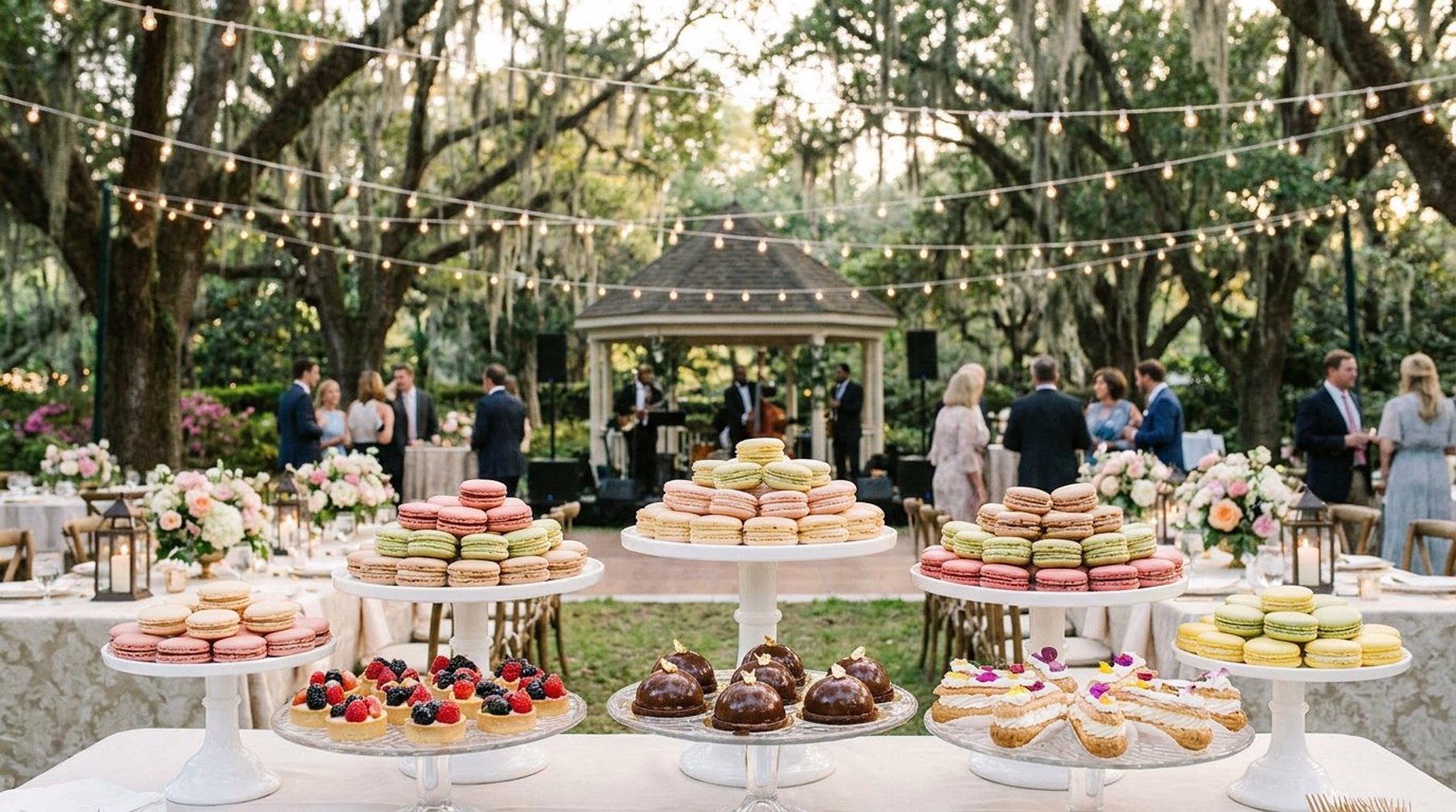
A French pastry display is a curated arrangement of multiple bite-sized desserts presented on tiered stands, mirrored platters, or custom display structures. Instead of a single large cake, you offer guests an edible gallery — a selection of French macarons, mini fruit tarts, chocolate mousse domes, éclairs, petit fours, and chocolate-covered strawberries arranged for both beauty and easy access.
The format originates in classical French patisserie, where individual portioned desserts (rather than sliced cakes) have always been the norm. A trained pastry chef builds the display the way a florist designs an arrangement — balancing height, color, texture, and flavor to create a centerpiece guests gather around. At The Rolling Pin in Duson, displays are designed to be photographed as much as eaten, with each pastry made to order for the event.
Cost Comparison: Pastry Display vs Wedding Cake
For a typical 100-guest Lafayette wedding, a custom multi-tier wedding cake from a specialty bakery generally runs $4–$8 per slice, plus design fees and a cake-cutting charge from the venue ($1.50–$3 per slice). A bite-sized French pastry display from a dedicated pastry caterer typically runs $3–$5 per piece, with 4–6 pieces per guest. The total is often comparable, but the value distribution is different.
What you are paying for shifts. With a wedding cake, much of the cost goes into structural engineering — internal supports, leveling, transportation rigs, and on-site assembly of a heavy tiered structure. With a French pastry display, more of the budget goes into ingredients and labor on the pastries themselves: real butter, fresh fruit, French chocolate, almond flour, and the hours required to handcraft hundreds of small pieces.
Hidden Costs to Ask About
- Cake-cutting fees: Many Lafayette and Acadiana venues charge per slice to cut and plate a wedding cake. Pastry displays are self-serve and usually avoid this charge entirely.
- Servingware rentals: Tiered cakes often require specialty knives, plates, and forks; a pastry display works with a simple cocktail napkin.
- Delivery and setup: A multi-tier cake requires careful transport and on-site assembly. Pastry displays are also delivered and set up, but the risk of structural failure is much lower in summer humidity.
- Groom's cake or secondary desserts: Couples ordering a wedding cake often add a separate groom's cake or dessert table. A pastry display absorbs that variety into one centerpiece.
Logistics: Why Acadiana Weather Changes the Math
Louisiana's heat and humidity are the deciding factor for many couples. A traditional buttercream wedding cake can soften and slump within an hour outdoors in Lafayette summer weather, and fondant — while more stable — can sweat and develop condensation in air-conditioned tents. A pastry display, made up of individually portioned items, holds up differently because each piece is structurally independent.
Many bite-sized French pastries are designed to be served at cool room temperature: macarons, petit fours, chocolate ganache tarts, and éclairs filled with stable pastry cream all travel well. Fruit tarts and mousse-based pastries can be added to refrigerated portions of the display closer to service. For an outdoor wedding in Youngsville, a tented reception in Broussard, or a barn venue in Carencro, this matters more than couples often realize during planning.
Setup, Service, and Cleanup
A wedding cake requires a dedicated cake table, a formal cutting moment in the program, a designated server, and time for the venue staff to plate and distribute slices. A pastry display becomes its own self-serve station — guests approach when they want dessert, take what looks appealing, and return for more. This naturally spreads dessert service across the reception instead of bottlenecking it into one fifteen-minute window.
Guest Experience: Variety vs Tradition
The biggest difference is what your guests get to choose. With a traditional cake, every guest receives the same flavor (or one of two if you have layered tiers). With a pastry display, a guest with a chocolate preference reaches for the mousse dome, while a guest who prefers something lighter picks a fruit tart, and another grabs a salted caramel macaron. Picky eaters, allergy-conscious guests, and dessert lovers all leave happy.
There's also the social dimension. Guests linger at a pastry display the way they do at a charcuterie board — pointing out flavors, comparing favorites, taking photos. It becomes a conversation piece during the reception's slower moments, especially after the ceremony and during the transition into dancing. Many couples in Acadiana describe their pastry display as the second-most photographed element of the reception, after the bride.
What About the "Cake Cutting" Moment?
Couples worried about losing the traditional cake-cutting photo can keep a small ceremonial top tier — sometimes called a "cutting cake" — alongside the pastry display. This preserves the photograph and the symbolic moment without committing to a full multi-tier structure. Some couples skip the cake entirely and instead share a single decorated chocolate mousse dome or oversized macaron as the symbolic first bite. The tradition adapts; it doesn't disappear.
How to Decide Which Is Right for Your Wedding
Choose a traditional wedding cake if your venue has strong climate control, your guest list has uniform dessert preferences, you have a strong personal attachment to the cake-cutting tradition, and your photographer has already planned shots around it. Choose a French pastry display if you are hosting outdoors in Acadiana, you want maximum variety for diverse guests, you'd rather invest in flavor and craftsmanship than structural cake engineering, or you're hosting a less-formal celebration that benefits from a self-serve dessert station.
Many couples in Lafayette Parish split the difference: a small two-tier cutting cake paired with a substantial bite-sized pastry display. This approach captures both the traditional moment and the variety, and for guest counts above 80 it often costs less than a single elaborate tiered cake while serving more dessert overall.
Booking Timeline in Lafayette
Whichever direction you choose, book your wedding dessert caterer 4–6 months in advance for peak wedding season (March through October in Louisiana). Custom pastry displays for 100+ guests fill calendars quickly, particularly during graduation and Mardi Gras-adjacent dates. For weekday weddings or off-season dates, 8–10 weeks is usually sufficient.
If you'd like to talk through which option fits your venue, guest count, and budget, the team at The Rolling Pin offers complimentary consultations. Reach out through the contact page or call (337) 303-3358 to start the conversation. Bring your venue details, expected guest count, and any inspiration photos you've collected.
Frequently Asked Questions
How much does a French pastry display cost compared to a wedding cake in Lafayette LA?
A French pastry display in Lafayette typically costs $3–$5 per piece with 4–6 pieces per guest, while a custom multi-tier wedding cake runs $4–$8 per slice. Total costs are usually comparable for 100-guest weddings, but pastry displays avoid cake-cutting fees and often reduce the need for a separate dessert table or groom's cake.
How many bite-sized pastries do I need per guest for a wedding?
Plan for 4–6 bite-sized pastries per guest if the display is the primary dessert at your reception. If you're also serving a small cutting cake or other desserts, 3–4 pieces per guest is sufficient. For longer evening receptions or weddings where dessert is the only late-night food, plan closer to 6 pieces per guest.
Can I still have a cake-cutting moment with a pastry display?
Yes. Many couples in Acadiana order a small two-tier "cutting cake" alongside their pastry display, which preserves the photographed cake-cutting tradition without the cost and logistics of a full multi-tier wedding cake. Some couples instead share a single oversized macaron or chocolate mousse dome as the symbolic first bite.
Will a pastry display hold up at an outdoor Louisiana wedding in summer?
A pastry display generally holds up better than a buttercream tiered cake in Louisiana summer weather. Macarons, petit fours, ganache-based pastries, and chocolate-covered strawberries are stable at cool room temperature, and refrigerated items like fruit tarts and mousse desserts can be added closer to service. A trained pastry caterer will adjust the menu based on your venue and time of year.
How far in advance should I book a wedding pastry display in Acadiana?
Book 4–6 months in advance for peak wedding season weddings (March through October) in the Lafayette area. For weekday or off-season dates, 8–10 weeks is usually sufficient. Custom displays for guest counts above 100 fill calendars fastest, especially during graduation season and weekends adjacent to Mardi Gras.

